The Annual Health Equity Summit, hosted by CASSA, is dedicated to addressing health disparities that disproportionately affect marginalized communities, with a particular focus on South Asian and other racialized groups. This highly anticipated event serves as a platform for key stakeholders, including experts, community leaders, policymakers, healthcare professionals, and advocates, to come together and collectively work towards achieving health equity.
The Summit explores a diverse range of pressing health topics, covering areas such as chronic diseases, mental health & addiction, sexual health, infectious/communicable disease health, policy-making, advocacy, and best practices. These comprehensive discussions shed light on the underlying causes of health disparities and facilitate the development of effective strategies to address them.
Characterized by vibrant exchanges of knowledge, experiences, and ideas, the Summit encourages participants to share their expertise and insights to drive positive change. It creates a unique space for collaboration, encouraging stakeholders to identify and address the complex societal, economic, and cultural factors that contribute to health inequalities.
Through open dialogue, impactful presentations, interactive workshops, and networking, the Annual Health Equity Summit empowers individuals and communities. The Summit creates a transformative environment where diverse voices are heard, collective wisdom is harnessed, and equity-focused strategies are conceptualized. It serves as a catalyst for mobilizing efforts to achieve health equity, ensuring equitable and quality healthcare services for all.
Our Mission
Our mission is to promote health equity by addressing disparities and advocating for equitable healthcare for all individuals and communities. Grounded in a comprehensive analysis of the SDoH, we strive to create meaningful impact through collaborative strategies and community engagement.
Key elements of our mission include:
- Advocacy: We actively advocate for policies, initiatives, and practices that improve health outcomes and reduce disparities, with a particular focus on South Asian and other racialized communities. We build coalitions and push for a South Asian Health Strategy for Ontario.
- Accessible, Anti-oppressive and Culturally Responsive Care: We work towards the development and implementation of healthcare strategies that are culturally and linguistically accessible, ensuring that individuals from diverse backgrounds can access quality care and services without barriers.
- Mental Health Support: We are dedicated to supporting the development of anti-oppressive mental health tools, services, and resources that are specifically tailored to meet the needs of South Asian communities, addressing the unique challenges they may face.
- Research and Disaggregated Data: We advocate for, support, secure, and disseminate research initiatives that highlight health disparities and promote race-based disaggregated data collection. By advancing knowledge in these areas, we strive to inform evidence-based solutions and policies.
- Empowerment and Well-being: Our mission includes championing healthcare services and practices that empower South Asians to enhance their health, well-being, and independence, enabling them to thrive and lead fulfilling lives.
14th Annual Health Equity Summit
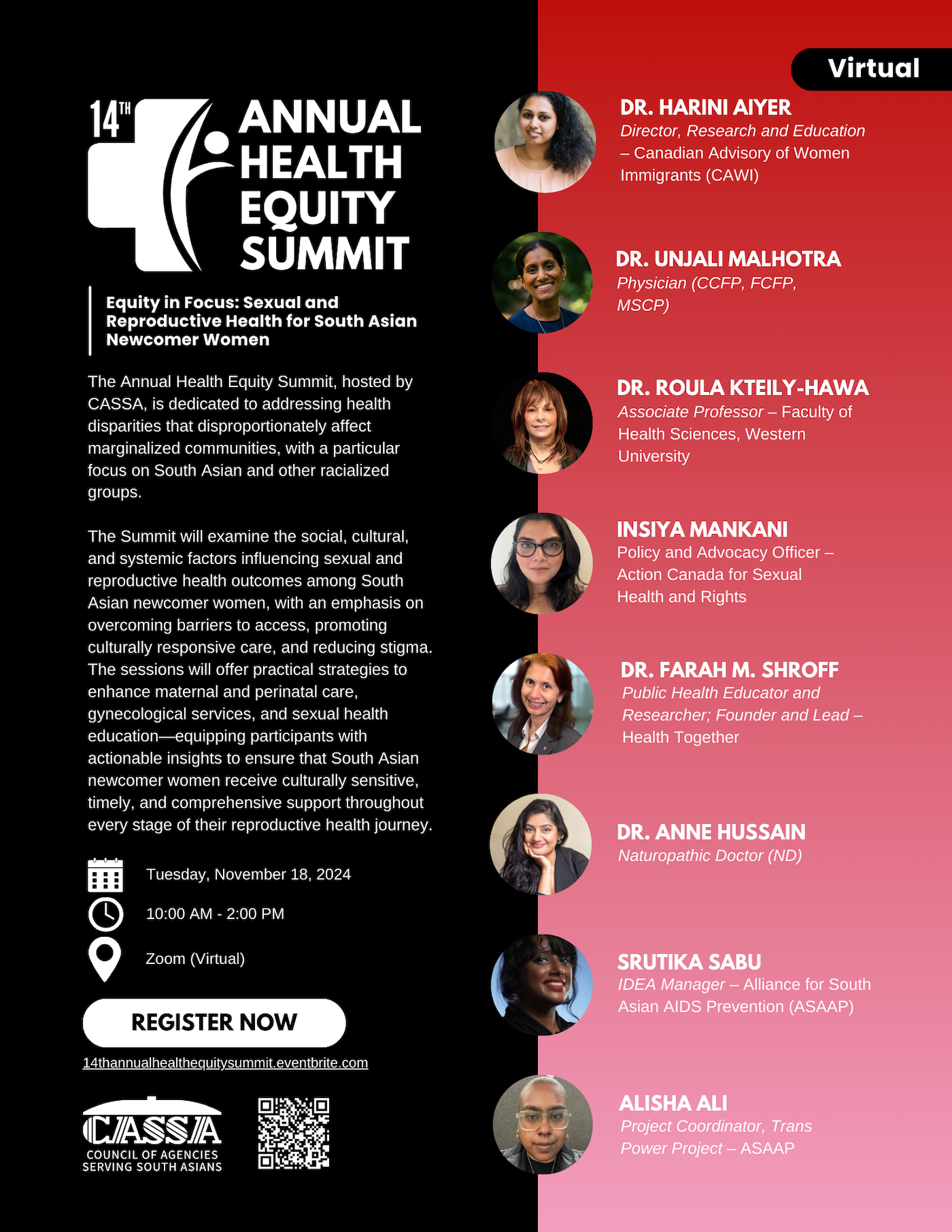
Equity in Focus: Sexual and Reproductive Health for South Asian Newcomer Women
CASSA’s 14th Annual Health Equity Summit is titled Equity in Focus: Sexual and Reproductive Health for South Asian Newcomer Women. The Summit will be a virtual event via Zoom on Tuesday, November 18, 2025 from 10:00 AM – 2:00 PM (EST).
The Summit examined the social, cultural, and systemic factors influencing sexual and reproductive health (SRH) outcomes among South Asian newcomer women, with an emphasis on overcoming barriers to access and promoting culturally safe, inclusive care. Bringing together policymakers, healthcare providers, researchers, and community leaders, the event featured a keynote presentation, a policy and practice panel discussion, and service-focused breakout sessions.
The keynote highlighted findings from a community-led research campaign on SRH education, identifying gaps in mainstream services and strategies for developing accessible, community-informed resources. This was followed by a cross-sector panel that explored current policies, programs, and interventions in Ontario and Canada, with panelists discussing successes, challenges, and opportunities to strengthen and scale approaches that support the SRH of South Asian newcomer women. The breakout sessions provided practical approaches for maternal and perinatal care, gynecological services, and sexual health education, offering participants actionable guidance to support women throughout their reproductive health journey.
40
Participants
5
Sessions
8
Speakers
Speakers

Dr. Harini Aiyer
Director, Research and Education – Canadian Advisory of Women Immigrants (CAWI)
Read more
Dr. Harini Aiyer has a PhD in Community and Population Health Sciences from the University of Saskatchewan and a MHSc in Reproductive and Cancer Biology from the Johns Hopkins Bloomberg School of Public Health. Her expertise lies in health equity, anti-oppressive methodologies, global health, and health professions education, which she applies to engage respectfully with communities and build authentic partnerships with an emphasis on equitable outcomes. She draws on her experiences as an immigrant in Canada while remaining mindful of the privileges and power dynamics in the spaces she navigates. Her work has been recognized through multiple awards, including the International Association for Medical Science Educators Student Research Grant and the Research Excellence Award in Interdisciplinary Studies.
Dr. Unjali Malhotra
Physician (CCFP, FCFP, MSCP)
Read more
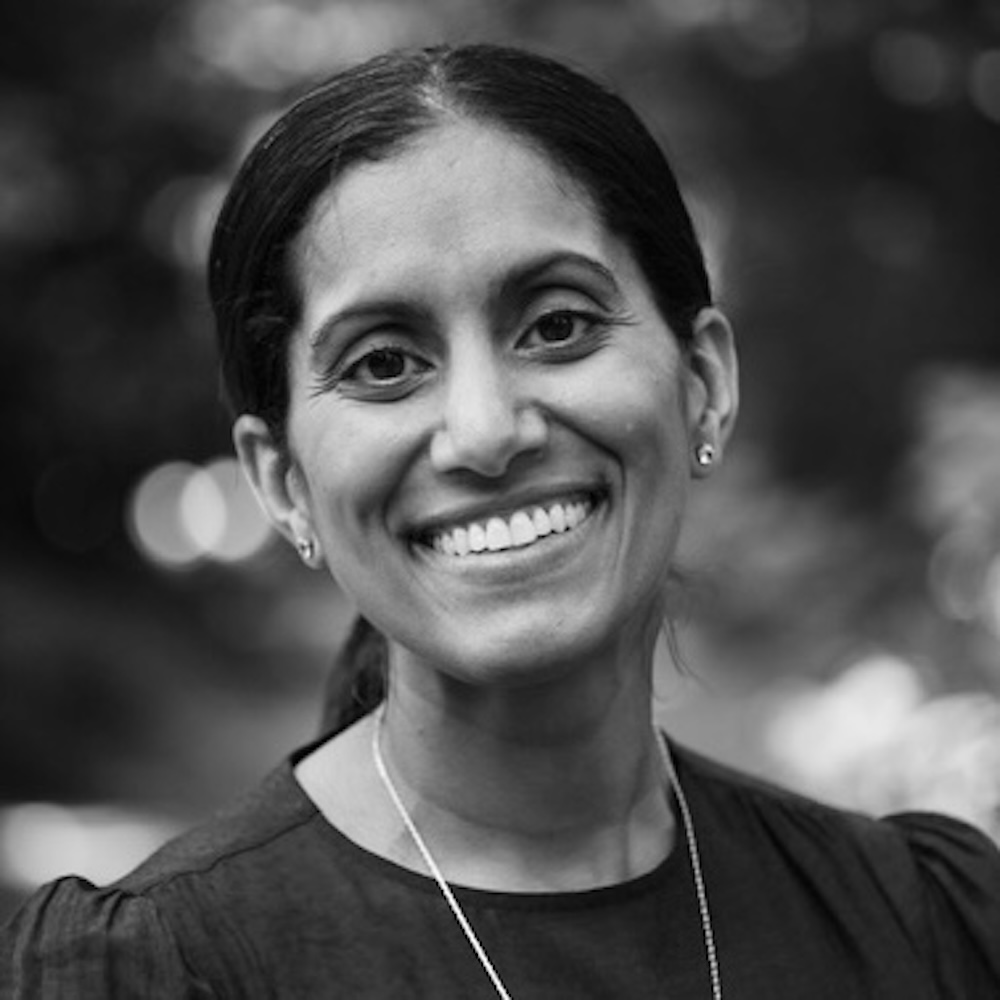
Dr. Unjali Malhotra graduated residency in 2005 and developed a third-year family medicine residency program in women’s health, which she later completed alongside electives across Canada focused on contraception and menopause. She ran a successful women’s health practice in Toronto and worked at the Bay Centre for Birth Control. After moving to Vancouver, she became Medical Director of Options for Sexual Health, overseeing more than 60 clinics and improving access to contraception across urban, rural, and remote communities in BC. She practiced at Crossroads Obstetrics and Gynaecology, chaired the SOGC Foundation, and served on boards including the Canadian Menopause Society. Dr. Malhotra co-created UBC’s rural women’s health residency program and, as Medical Officer of Women’s Health at the First Nations Health Authority (2017–2025), advanced equity, patient rights, and HPV guidelines, earning multiple national awards.

Dr. Roula Kteily-Hawa
Associate Professor – Family Studies and Human Development, Faculty of Health Sciences, Western University
Read more
Dr. Roula Kteily-Hawa is an Associate Professor of Family Studies and Human Development in the Faculty of Health Sciences at Western University. A passionate educator and researcher, Dr Hawa draws on her lived experience as a refugee to Canada and her deep commitment to social justice. She has vast experience in community-based participatory research and has spent over a decade engaging racialized and immigrant communities in Canada, including South Asian immigrant women, in the area of HIV prevention, resilience, mental health, and stigma reduction. Dr. Hawa is the Principal Investigator of the YSMENA Program, which focuses on sexual health and well-being of diaspora Middle Eastern and North African youth.

Insiya Mankani
Policy and Advocacy Officer – Action Canada for Sexual Health and Rights
Read more
Insiya Mankani is the Policy and Advocacy Officer at Action Canada for Sexual Health and Rights, where she helps advance the sexual and reproductive health (SRH) policy landscape in Canada. In this role, she works closely with parliamentarians, policymakers, and community organizations to promote SRH equitable access to services and strengthen rights for marginalized and underserved populations. Prior to joining Action Canada, Insiya served at Human Rights Watch as the Senior Advocacy and Development Coordinator, supporting international human rights initiatives and advocacy campaigns. Based in Ottawa, Ontario, Insiya is committed to advancing human rights, health equity, and systemic change through policy, advocacy, and collaboration.

Dr. Farah M. Shroff
Public Health Educator and Researcher; Founder and Lead – Health Together
Read more
Dr. Farah M. Shroff, a South Asian Canadian public intellectual, is a global leader in advancing health equity and education. She is the founder of Health Together, where she champions the vision of Health for All on a Healthy Planet, with a focus on maternal mortality, women’s health, and the environment. A trusted policy expert, she has collaborated with governments in Canada and abroad and has served on the Board of Governors of the Vancouver Coastal Health Authority. Recognized by the Harvard T.H. Chan School of Public Health with the prestigious Takemi Fellowship in 2021–22, she continues to collaborate with colleagues at Harvard. Dr. Shroff also celebrates her South Asian heritage by teaching yoga, dance, meditation, and other cultural practices that foster holistic wellbeing.

Dr. Anne Hussain
Naturopathic Doctor (ND)
Read more
Dr. Anne Hussain is a Naturopathic Doctor, Menopause Society Certified Practitioner, and author of The Period Literacy Handbook. Her mission to empower others began with her personal journey navigating PCOS and the lack of reproductive health education in Karachi, Pakistan. She supports patients through all phases of menstrual life and addresses conditions such as PCOS, PMS, endometriosis, fertility, hormone health, and perimenopause with a compassionate, collaborative approach. In addition to hosting the podcast Phase to Phase: The Hormone Health Show, she partners with Canadian period equity organizations, translating over a decade of clinical expertise into tangible social change. Dr. Hussain believes that developing agency over your health is not only a personal act but also a powerful, political tool for demanding better care and shaping a healthier world.

Srutika Sabu
Manager of Inclusion, Diversity, Equity, and Accessibility (IDEA) – Alliance for South Asian AIDS Prevention (ASAAP)
Read more
Srutika Sabu (she/they) is a Malayali-Canadian doctor-turned-artist and Project Manager. With a background in primary care and community-based health research activism, she has led several initiatives promoting South Asian health, focusing on femme, queer, and trans communities across the United States and the Greater Toronto Area. Currently, Srutika serves as the IDEA Manager at ASAAP, where she oversees the WAGE Canada–funded Trans Power Project. This project empowers racialized trans, non-binary, and gender non-conforming individuals by providing sexual health workshops, capacity building, mentorship, and support services. Through her multifaceted approach, she integrates medical expertise, community engagement, and storytelling to foster inclusive health outcomes for marginalized populations.
Alisha Ali
Project Coordinator, Trans Power Project – Alliance for South Asian AIDS Prevention (ASAAP)
Read more
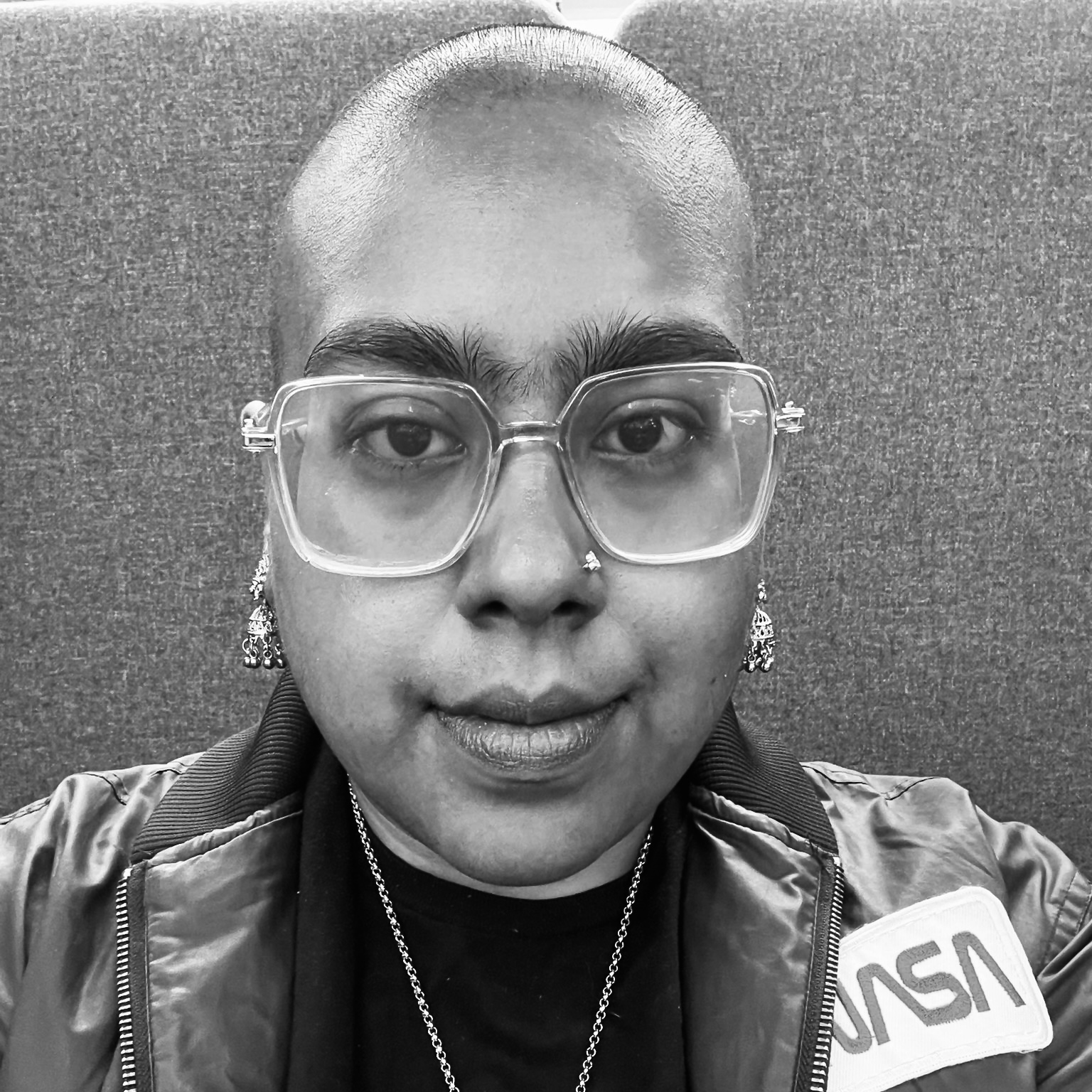
Alisha Ali (they/them) is a neurodivergent non-binary artist and community organizer of Indo-Caribbean Trini and Singaporean-Tamil descent. Through their work at ASAAP, they have been instrumental in sexual health, sexually transmitted and blood-borne infections (STBBI) education, and harm reduction initiatives, particularly serving trans, queer, and South Asian & Indo-Caribbean femme communities. Alisha currently serves as the Project Coordinator for the WAGE Canada–funded Trans Power Project, which empowers racialized trans, non-binary, and gender non-conforming individuals through sexual health workshops, capacity building, mentorship, and support services.